
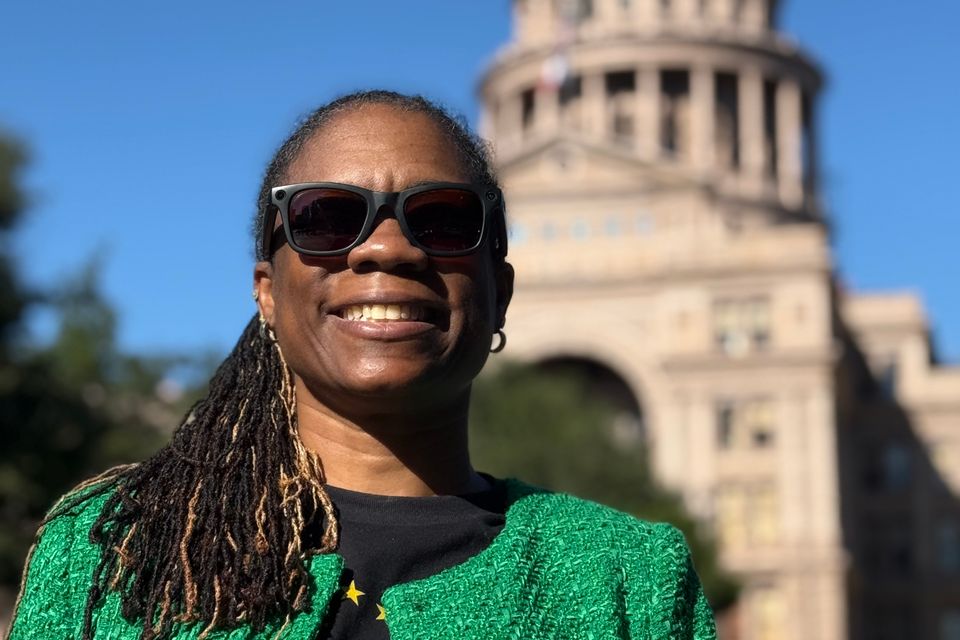
Op-Ed - Greater Lackland and San Antonio's West Side - LaKeisha D. Howard
Guest Commentary / Historical Perspective Piece by LaKeisha D. Howard, West Side Resident, Air Force and VA Retiree who resides at 730 Barrow Peak, San Antonio, TX 78251. She can be reached at 210-559-7245
On San Antonio’s West Side, History Explains the Present
San Antonio’s West Side did not arrive at its current challenges by accident, nor through a lack of effort or pride. Its story is one of service, industry, and resilience—followed by decisions made far from the neighborhoods that felt their consequences most deeply.
In 1917, Kelly Field was established on farmland southwest of downtown, helping birth American military aviation. Over the next several decades, the surrounding communities grew alongside it. Generations found stable, skilled work maintaining aircraft, repairing engines, and supporting national defense. By the mid‑20th century, the San Antonio Air Logistics Center was the city’s largest single employer, anchoring thousands of families to the West Side.
That history matters, because what followed was not a natural decline—but a structural break.
In 1995, the Base Realignment and Closure Commission recommended closing Kelly Air Force Base. With it disappeared tens of thousands of jobs and an entire employment ecosystem. Redevelopment eventually brought new activity to the site—now Port San Antonio—but the scale, access, and workforce alignment were never the same. Entire neighborhoods east of Loop 410 were left to absorb the shock.
Today, that divide is visible on a map. West of Loop 410, new hospitals, commercial centers, and residential developments are reshaping the landscape. East of Loop 410, many families still live with the aftereffects of industrial loss: housing instability, transportation gaps, schools under strain, and limited access to mental‑health care.
This is not a story unique to San Antonio. Across the country, communities that once supported federal missions were promised transition support, then asked to compete in a market they were never built to navigate alone. When regional growth came later, it followed highways and open land—not legacy neighborhoods.
Recent census reporting shows that San Antonio continues to grow economically while remaining one of the nation’s highest‑poverty large cities.
That contradiction makes sense when poverty is understood not as personal failure, but as the accumulation of missed connections: housing disconnected from wages, education disconnected from jobs, healthcare disconnected from need.
The West Side’s history suggests a path forward.
Stable communities were built here before—through clear workforce pipelines, affordable housing tied to local employment, and institutions that treated families as long‑term stakeholders rather than short‑term statistics.
Rebuilding that stability requires the same intentionality, adapted to modern realities.
What the West Side has always offered is commitment—to service, to family, and to San Antonio itself. Any serious conversation about the city’s future must begin by recognizing that legacy, learning from it, and ensuring that growth reaches the neighborhoods that carried this city through its most consequential chapters.
History does not simply explain where we’ve been. On the West Side, it explains what was lost—and what can still be rebuilt.
LaKeisha D. Howard
LaKeisha D. Howard is a San Antonio–based retired professional with a background in military service and human‑centered leadership, bringing experience across healthcare, counseling, and community‑focused work. She holds a graduate degree from Colorado Christian University and has built her career around supporting individuals and families through wellness‑oriented and service‑driven roles. Her professional experience reflects a commitment to mentorship, care coordination, and community support shaped by years of work connected to military and public‑service environments.
On San Antonio’s West Side, History Explains the Present
San Antonio’s West Side did not arrive at its current challenges by accident, nor through a lack of effort or pride. Its story is one of service, industry, and resilience—followed by decisions made far from the neighborhoods that felt their consequences most deeply.
In 1917, Kelly Field was established on farmland southwest of downtown, helping birth American military aviation. Over the next several decades, the surrounding communities grew alongside it. Generations found stable, skilled work maintaining aircraft, repairing engines, and supporting national defense. By the mid‑20th century, the San Antonio Air Logistics Center was the city’s largest single employer, anchoring thousands of families to the West Side.
That history matters, because what followed was not a natural decline—but a structural break.
In 1995, the Base Realignment and Closure Commission recommended closing Kelly Air Force Base. With it disappeared tens of thousands of jobs and an entire employment ecosystem. Redevelopment eventually brought new activity to the site—now Port San Antonio—but the scale, access, and workforce alignment were never the same. Entire neighborhoods east of Loop 410 were left to absorb the shock.
Today, that divide is visible on a map. West of Loop 410, new hospitals, commercial centers, and residential developments are reshaping the landscape. East of Loop 410, many families still live with the aftereffects of industrial loss: housing instability, transportation gaps, schools under strain, and limited access to mental‑health care.
This is not a story unique to San Antonio. Across the country, communities that once supported federal missions were promised transition support, then asked to compete in a market they were never built to navigate alone. When regional growth came later, it followed highways and open land—not legacy neighborhoods.
Recent census reporting shows that San Antonio continues to grow economically while remaining one of the nation’s highest‑poverty large cities.
That contradiction makes sense when poverty is understood not as personal failure, but as the accumulation of missed connections: housing disconnected from wages, education disconnected from jobs, healthcare disconnected from need.
The West Side’s history suggests a path forward.
Stable communities were built here before—through clear workforce pipelines, affordable housing tied to local employment, and institutions that treated families as long‑term stakeholders rather than short‑term statistics.
Rebuilding that stability requires the same intentionality, adapted to modern realities.
What the West Side has always offered is commitment—to service, to family, and to San Antonio itself. Any serious conversation about the city’s future must begin by recognizing that legacy, learning from it, and ensuring that growth reaches the neighborhoods that carried this city through its most consequential chapters.
History does not simply explain where we’ve been. On the West Side, it explains what was lost—and what can still be rebuilt.
LaKeisha D. Howard
LaKeisha D. Howard is a San Antonio–based retired professional with a background in military service and human‑centered leadership, bringing experience across healthcare, counseling, and community‑focused work. She holds a graduate degree from Colorado Christian University and has built her career around supporting individuals and families through wellness‑oriented and service‑driven roles. Her professional experience reflects a commitment to mentorship, care coordination, and community support shaped by years of work connected to military and public‑service environments.